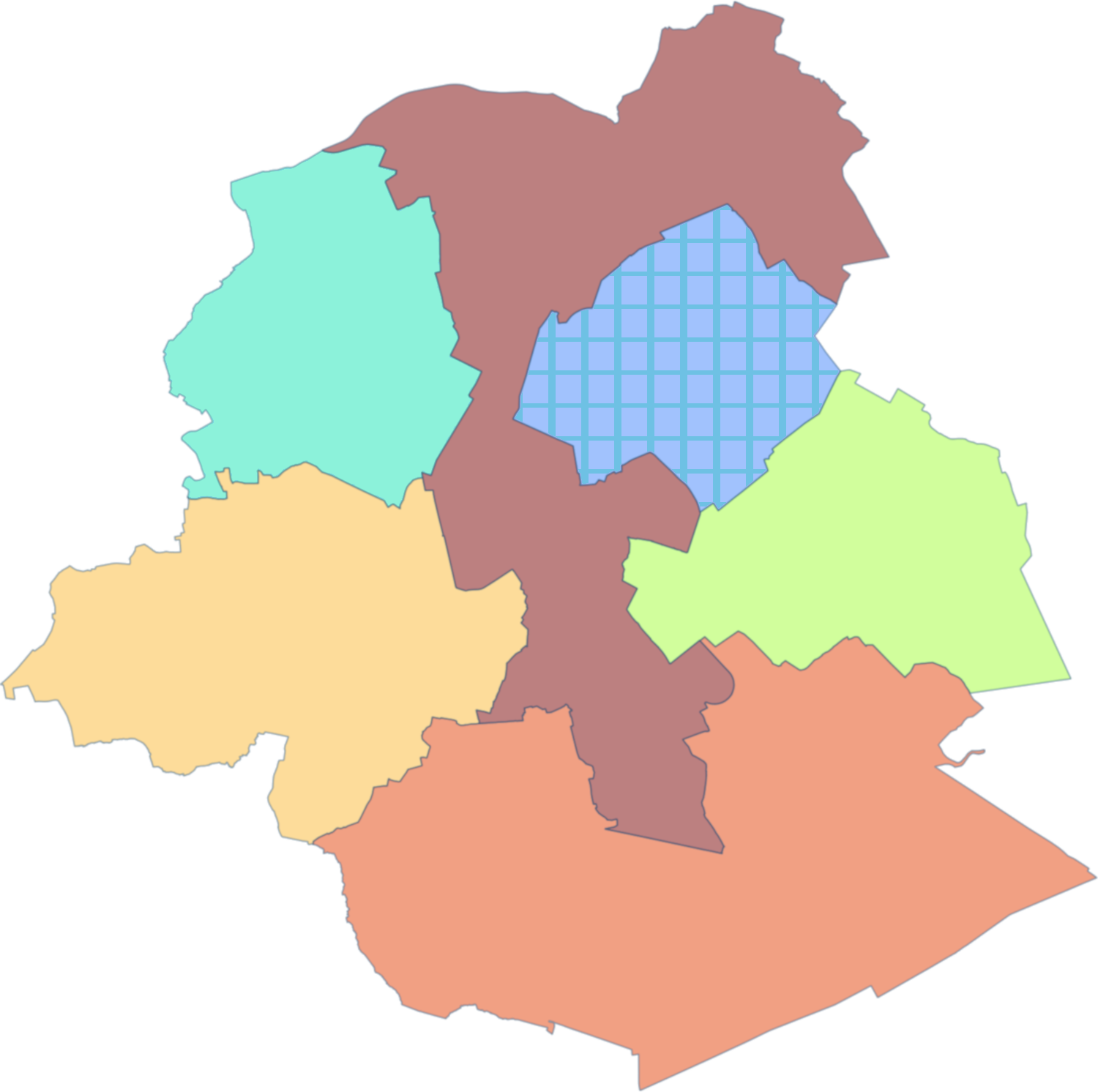
Brussels North Police Zone
(Schaarbeek, Sint-Joost-ten-Node, and Evere)
- A zonal diversity netwerk Bruno@ttitudes established in 2010.
- Consisting of approximately 20 members, regardless of rank, role or level.
- Raising awareness about discrimination over the years through various initiatives, such as the launch of the Diversity Fortnight, the No Hate campaign (see below), the development of a program to combat sexism (see below), the organisation of educational trips to Breendonk, the Red Star Line Museum, and Auschwitz, …
- Member of the interzonal Diversity Network with Antwerp, Ghent and Mechelen-Willebroek (now ‘Rivierenland’) launched at the end of 2017: a practical diversity network with the goal of exchanging best practices and identifying challenges related to diversity in the broadest sense of the word. The network jointly drafted the framework for professional profiling, which later served as the foundation for the Ministerial Circular CP5
(link: https://www.politie.be/5344/nl/nieuws/ondertekening-handelingskader-professioneel-profileren).
- General policy note on corporate culture/diversity.
In 2020, the position of Advisor to the Chief of Police – Coordinator for Organisational Culture was created with the objective of fostering a positive working environment by defining, drafting, promoting and disseminating a continuously evolving culture based on shared norms and values, and respect for diversity in the broadest sense of the word. Including actions such as a training by UNIA of the police staff on ethnic profiling and a World Café event with citizen and youngsters.
- Federal training: ‘Holocaust, Police and Human Rights’ in Kazerne Dossin in Mechelen
(link: https://kazernedossin.eu/aanbod-item/opleiding-holocaust-politie-en-mensenrechten/) - Inhouse training : “First Contact – Great Impact”
The translation of the professional profiling framework into a training module, introduced by the Chief of Police, highlighting the importance of the initial police-citizen contact for the overall legitimacy of the police, trust in police services, and future cooperation.
The World café “Mutual Respect” served as input for the development of the training.
- 20 day program for newcomers focusing on continued professional development:
- Including the training on professional profiling
- Including a module on dealing with discrimination and with sexist, racist or other forms of transgressive behaviour
Recruitment policy aims at creating a divers corps:
- Recruitment coaching: objective recruitment using the STARR Method
- Blue Cards (developed in collaboration with IOM – ‘Internationale Organisatie van Migratie’): in conversation with the citizens, giving potential candidates a blue card so they can contact the recruiter they spoke with, ensuring personal contact.
- Recruiters introduce the police in schools with a 7-th year safety-related program and other – local – schools.
- Jobpage, where diversity and individual identity are highlighted
- Discrimination referents: Since the circular COL13/2013, it is mandatory to train individuals within each police zone on discrimination issues. They thus serve as contact points in case of discrimination. They raise awareness among other employees about existing legislation and can provide advice on the identification and registration of discrimination and hate crimes.
- Since 2024, these COL 13/2013 referents, together with other operational members of the zonal diversity network and representatives of the victim assistance service, form the NO Hate Team.This team was specifically established and trained to ensure appropriate reception, register complaints, and offer further assistance to victims of hate crimes and discrimination.
- For the „Reflect and Act“ project by the liaison assistants (see below), the NO Hate Team developed a module for youngsters from youth centers on the topics of discrimination, tolerance, and inclusion. The focus was placed on people with disabilities, racism, antisemitism, and homophobia.
- Ethical debriefings are organised to reflect on the moral and ethical choices made during interventions. The focus lies on examining the values and norms that influenced decisions, with the aim of strengthening ethical awareness within the organisation. In cases involving discrimination or a lack of inclusion, the debriefing is led by a NO Hate referent who is also a trained ethical debriefer
- Three liaison assistants, responsible for developing projects to improve the relationship between police and local youth.
- Team School and the Mascot Bruno: from kindergarten to secondary school, police officers are actively involved in raising young people’s awareness of police work, with the aim of fostering a more nuanced perception and strengthening the connection with the community. For example: in sixth-grade classes that opt in, a “police godparent” is appointed, who serves as a liaison between the pupils and the police.
- Project “What if we introduced ourselves?”, which brings together police officers and youngsters to foster mutual understanding and break down stereotypes.
- Project “Bruno and its elders”, which is a a community-based initiative that aims to strengthen the relationship between the police and the elderly. It includes a strong focus on crime prevention, particularly in areas where older people may be more vulnerable — such as internet fraud, pickpocketing, and scams
- Collaboration with TADA: Several times a year, officers from BruNo take part in exchange activities with children from TADA, aimed at introducing them to the police profession, demystifying the role of police, and building trust with socially vulnerable youth.
- Program to combat sexism (external and internal): including the training of police officers, the organisation of awareness sessions for citizens and youngsters, the execution of specific anti-harassment police operations, and the development and implementation of a gender equality plan.
- Roadshow for the launching of the code of conduct within the units, centred around a case of discriminatory workplace bullying, with the key question “when would you speak up?”
- Training for recruiters on unconscious bias
- Leadership program, paying particular attention to issues such as discrimination, transgressive behaviour, professional profiling, fostering a feedback culture and structured debriefing.
- Follow up of the action plan resulting form the Gender Equality Plan, including topics such as inclusive communication, whistleblowing mechanism, menopause and parenting policies, disability management,…
- Inhouse launching of the federal training “the serious game” :Ethical reflection through playful activity (The serious game being an integrity game to encourage police officers to reflect ethically on situations involving conflicting values)
- The design of an integrated integrity policy, based on the Integrity Management Framework